Lean toward a slider zipper when the pouch needs a guided reclosure action and the top layout has room for the slider and clear opening instructions. Lean toward a press-to-close zipper when a straightforward closure suits the pack and the user can align and press the tracks together. Confirm the direction on the actual first-open route, product condition, pouch size and format, top-panel space and a filled sample.
Start with the opening sequence
The closure is used after the consumer has opened the pouch for the first time. That sounds obvious, but it is often missing from a quote request. A zipper request without a tear route, laser score or other first-open cue leaves an important part of the experience undefined.
Put the opening edge, tear notch, zipper line and any instruction panel on the same artwork sketch. If the pouch will hold treats for several days, show how a hand reaches the product after the top is opened. If it is a small, short-use pouch, the extra closure component may not solve a problem the buyer actually has.
What to compare before choosing the closure
| Project question | Slider zipper | Press-to-close zipper |
|---|---|---|
| How does the consumer close the pouch? | A fitted slider guides the closing action. | The user aligns and presses the zipper tracks together. |
| What needs space in the layout? | Allow for the slider, the zipper position and clear opening or closing instructions. | Protect the zipper line and enough top-panel space for the user to grip and align it. |
| What should the sample answer? | Whether the component remains accessible and intuitive on the filled pouch. | Whether the user can find, align and close the tracks after normal product use. |
| What should not be assumed? | That the slider alone proves freshness, shelf life or a defined number of reclosures. | That a familiar zipper style will work unchanged across formats, fills or opening layouts. |
Five details that change the discussion
- Product condition. State whether the treats are brittle, powdery, oily, sticky or shaped in a way that may affect the top area after opening.
- Fill and pouch format. Include the fill weight, approximate dimensions and whether the pack is a stand-up pouch, flat pouch or a more structured bag. The opening edge and available top space change with the format.
- Daily use. Describe whether the pouch is likely to be opened once, kept for repeated serving or handled by a customer who may be holding a pet or scoop at the same time.
- Artwork and information zones. Map barcode, lot or date-code area, mandatory label copy, opening instructions and the feature position before artwork is locked.
- Sample purpose. Ask a precise question. A visual sample, a filled handling sample and a line-fit review answer different things.
Use a filled sample for the part that matters
An empty pouch can help the team review print, panel layout and the position of the closure. It cannot show how the pouch sits after filling, whether crumbs collect near the top area or whether the zipper is still easy to reach once the product settles.
For a multi-serve treat project, take the closure decision into a filled-sample review. Open it as the customer would. Reach inside. Close it again. Record the observation that matters to the project. This is a better brief than asking a supplier to promise a closure result from a feature name alone.
XZ format and layout reference
Use the pouch layout as part of the closure brief
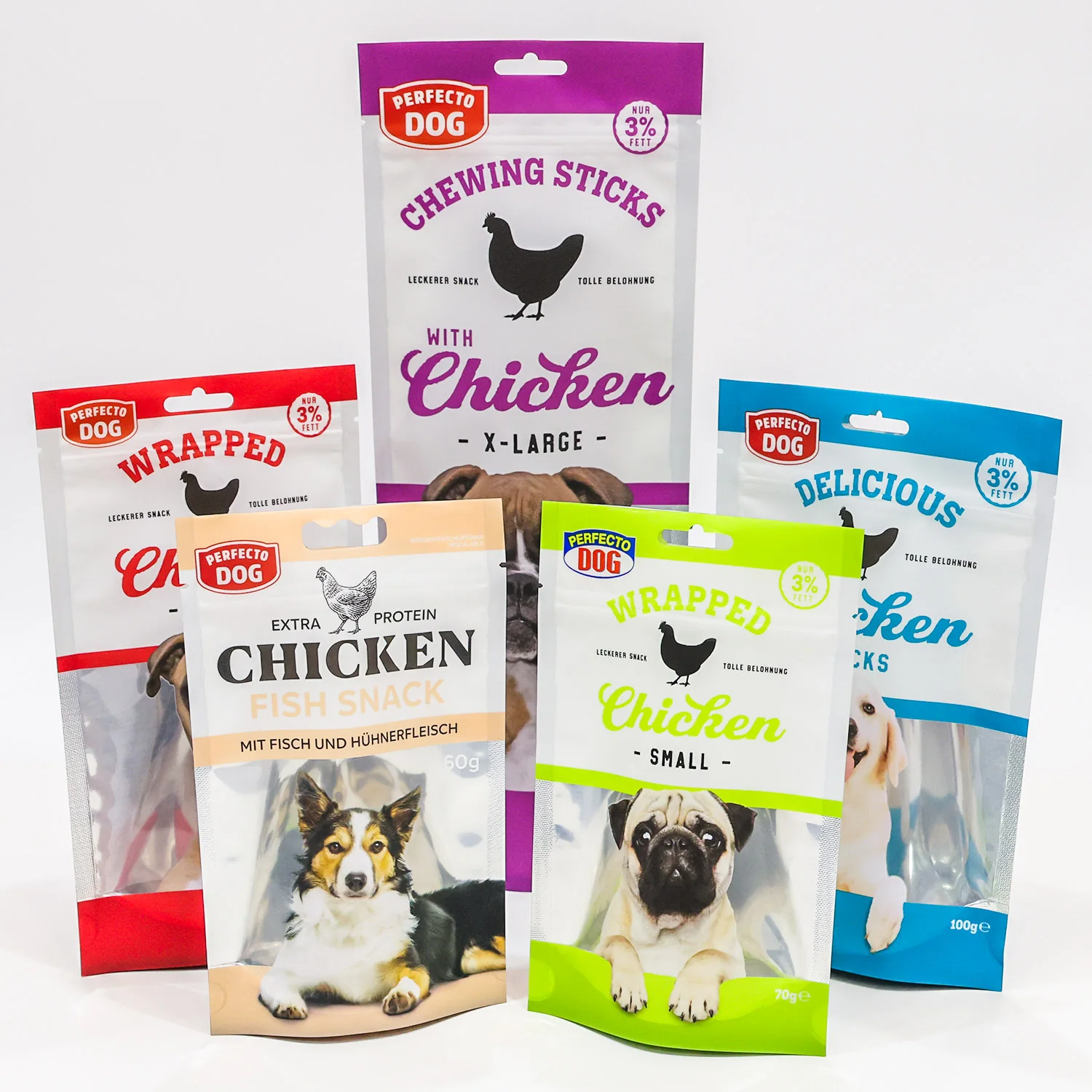
XZ Packing's public pet treat packaging page shows a stand-up zipper pouch as a format reference and asks buyers to map the zipper area, opening route, barcode and date-code zones before graphics are finalised. The 3D Packaging Designer can help a team discuss bag style, approximate dimensions and feature placement before the quotation conversation.
Use these references to shape the pouch brief, then confirm closure suitability on the filled pack during the project review.
What to send for a useful zipper quotation
Send the treat type, fill weight, preferred pouch format and approximate dimensions. Add a simple opening sketch, the closure direction under review, artwork status, target market, any known filling details and the question the sample should answer. If you have a current pouch, share front, back and top-edge photographs as a reference, then identify which parts you want to retain and which parts need a fresh review.
Request a zipper and opening-layout review
For a meaningful quote, include the product, fill weight, pouch format, opening sketch, artwork status and the closure question you need a sample to answer.
Frequently asked questions
Which zipper is better for pet treat packaging?
Neither is universally better. Compare the first-open route, pouch format, top-panel space, product condition, expected daily use and the filled-sample question.
Can a slider zipper guarantee freshness?
No. A zipper is one part of the pack. Product protection and shelf-life validation depend on the complete product and packaging system.
Can the same closure be used on every pet treat pouch?
Do not assume so. A flat single-serve pouch and a multi-serve stand-up pouch can have different opening layouts, fill conditions and user needs.
What should be shown in the artwork before a closure is chosen?
Show the opening edge, zipper position, tear route, feature instructions, seal area, barcode and lot or date-code area. This prevents a late conflict between the closure and required information.