Moisture, oil, aroma, shape, sharp edges and fragility can affect the packaging discussion.
Custom pet treat packaging
Custom dog treat packaging pouches for pet treat brands.
XZ Packing is a Pet Food Packaging Manufacturer for brands preparing custom treat pouches. Share the product, pack format, artwork and commercial requirements so we can move the discussion toward a manufacturable packaging direction and quotation.
Stand-up and flat pouchesResealable featuresArtwork and print inputsQuote-ready brief
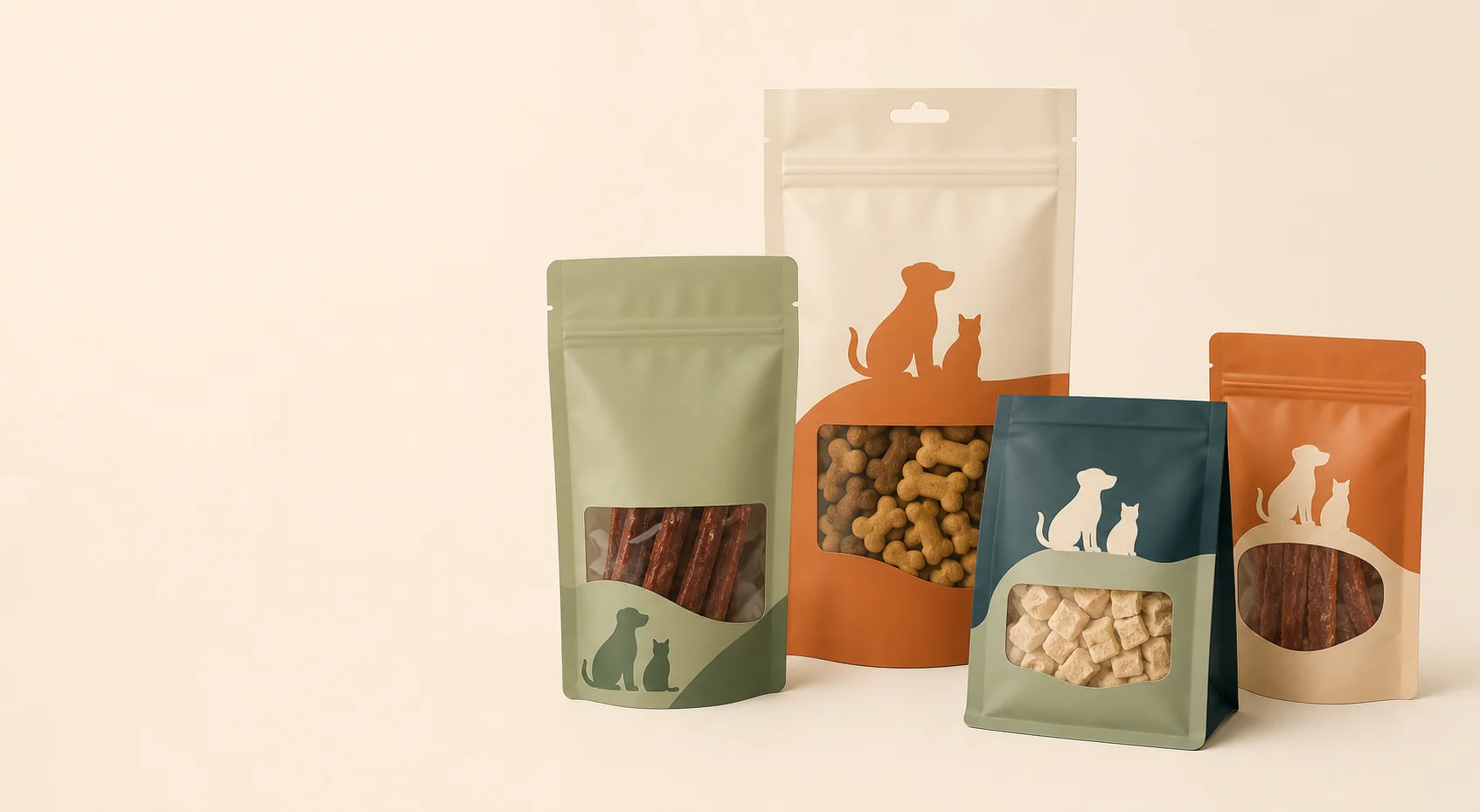
Start with the treat
Pet treat packaging starts with what happens inside the pouch.
Biscuits, jerky strips, dental chews, freeze-dried pieces and soft treats can create different packaging questions. Start with the product condition, how it is packed, how it travels and how the customer opens it.
State the exposure or product change the package is intended to manage.
Single use, repeated opening, carrying, pouring and portion control affect the brief.
Shelf, hanging, counter and e-commerce packs need different panel and feature planning.
Share net weight, piece size, headspace and filled shape where known.
Opening width, product dust or oil, seal-area cleanliness and line handling belong in the first discussion.
A practical starting point: send what is known. Product and sales context helps narrow the first packaging direction; remaining questions can be identified with the project team.
Pouch style options
Choose the pouch format around pack size, display and opening needs.
Compare the format with the actual treat, fill weight, feature request and filling method before fixing the layout.
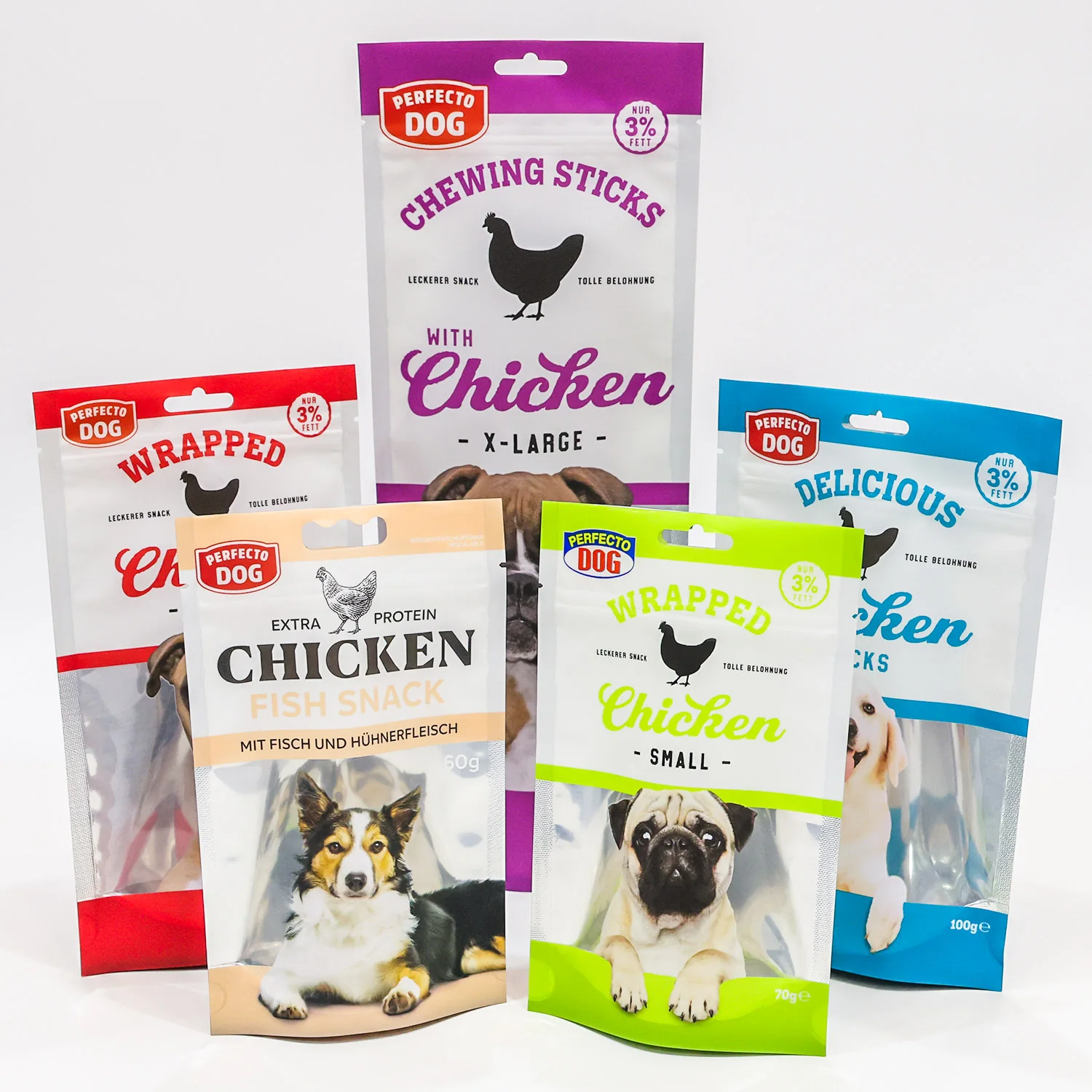
Stand-up pouch
Consider this direction when the filled pack needs a base for shelf display or a multi-serve opening route.
- Standing retail presentation
- Zipper, notch, window or hang-hole discussion
- Review base geometry and filled presentation
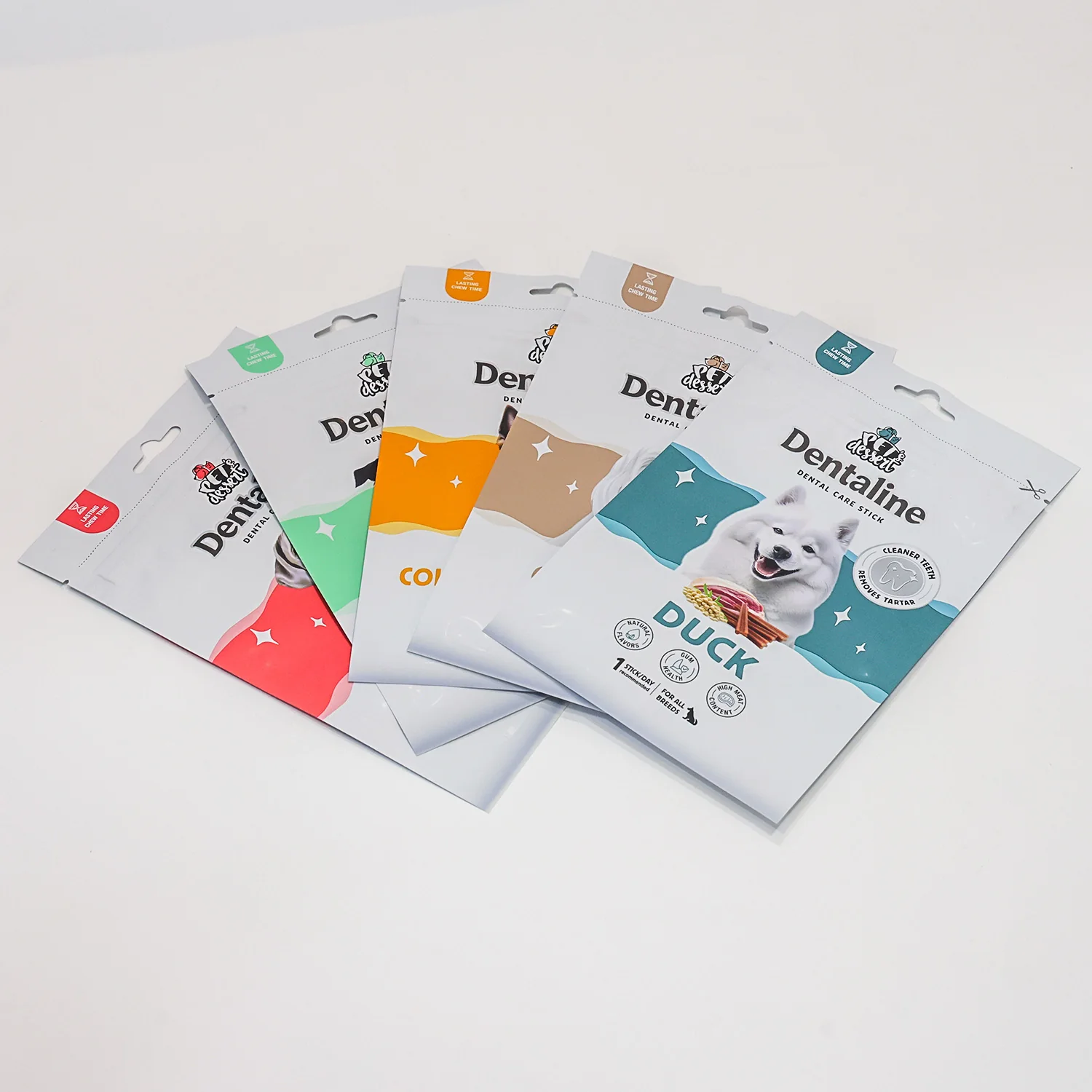
Flat / three-side-seal pouch
A compact format to consider for small portions, single serves or planned hanging display.
- Map opening and coding zones
- Protect hang-hole and tear areas in artwork
- Compare with a stand-up format where relevant
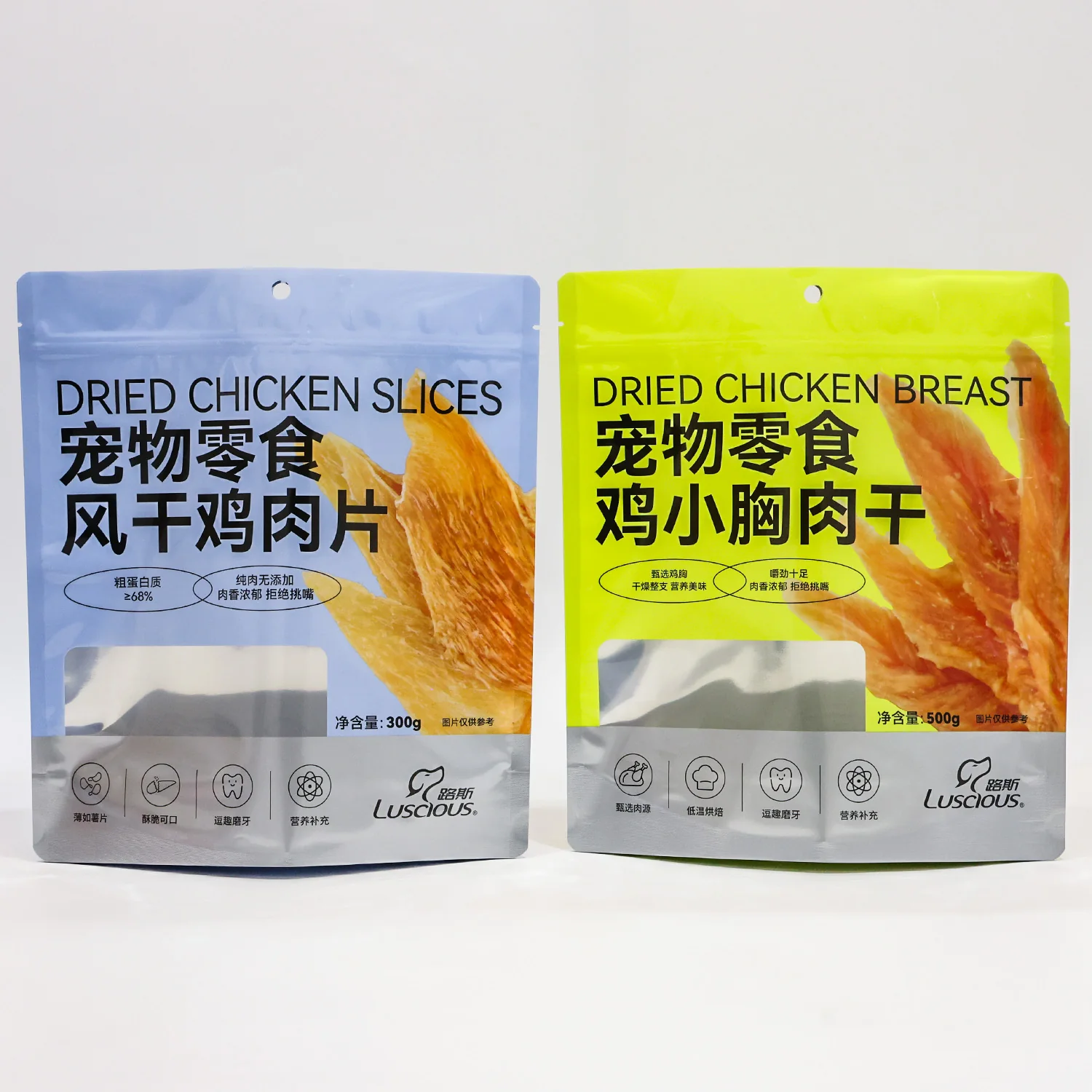
Structured pouch or bag
Flat-bottom or quad-style directions can be reviewed when larger packs or extra panels are needed.
- Consider filled weight and handling
- Map front, back, side and opening areas
- Review format, feature and filling fit together
| Buyer situation | Formats to review | Questions before quotation |
|---|---|---|
| Trial, sample or small portion | Flat or three-side-seal pouch | Opening route, hanging display, seal and coding zones. |
| Multi-serve treat pouch | Stand-up pouch or selected flat-bottom direction | Reclosure, filled stance, headspace and artwork panels. |
| Family pack or larger-format treats | Stand-up, flat-bottom or structured pouch direction | Handling, opening size, carrying needs, sealing and distribution conditions. |
Visualise the configuration
Compare a pouch direction in 3D before the quote discussion.
Use the 3D Packaging Designer to review bag style, approximate dimensions, colours, features and early artwork placement. It supports visualisation and quotation preparation, not technical approval.
From brief to manufacturing discussion
A packaging brief should lead to something manufacturable.
XZ Packing uses the product, pouch format, artwork and feature inputs to structure a quotation conversation around the packaging project, not just a single bag image.
Share the project
Treat type, pack size, destination market and commercial context.
Review pouch direction
Format, material direction, features and filled-pack considerations.
Map artwork and features
Panels, opening route, information areas and requested functions.
Plan the next review
Sample objectives and production checks are agreed for the specific project.
Existing pouch examples on this page are format references. Sample and validation requirements remain project-specific.
Barrier and material direction
Start with the protection requirement, then define the material direction.
Use the product, protection objective, packing process, storage and distribution conditions to narrow the material discussion. A current bag or familiar laminate can be a useful reference, but the specific structure is confirmed for the project.
ProductDescribe moisture, oil, aroma, texture, shape and handling characteristics that may matter.
ObjectiveState the exposure or product change the project is trying to manage and the shelf-life objective being evaluated.
ProcessShare filling, sealing and product-contact information where known.
Route to marketInclude storage, distribution, destination market, display method and evidence expected before launch.
Send current structures, samples or barrier data with their test basis where available. Final material suitability and validation are confirmed for the specific project.
Artwork and print preparation
Plan the pouch format before finalising the artwork.
Design teams need the format, opening edge, seals, gussets, zipper area, window or hang hole, barcode and date-code zones before graphics are locked.
List flavours, treat types, pack sizes and artwork variations so the full product range can be discussed.
Share artwork status, colour references and finish preferences such as matte or gloss.
Reserve room for product information, barcode, lot/date coding and destination-market content.
The 3D preview helps teams discuss panel placement. Artwork approval and production release follow the project review process.
Buyer brief checklist
What to send us for a pet treat packaging quote.
Send the inputs you have. The first review can identify what still needs a decision.
- Treat type and condition: biscuits, jerky, dental chews, freeze-dried or soft treats, plus relevant oil, moisture, aroma, fragility or sharp-edge context.
- Target pack: net weight or volume, estimated dimensions, product count and a filled sample or current package reference where available.
- Preferred pouch direction: stand-up, flat, three-side seal, flat-bottom or another format to compare.
- Features: zipper, slider zipper, tear notch, clear window, hang hole, rounded corners, handle or other requested feature.
- Material context: shelf-life objective, storage and distribution conditions, plus any barrier or material information available.
- Artwork system: SKU count, artwork status, colour or finish direction, barcode and date-code areas.
- Commercial context: estimated order quantity, target market, filling method and timing considerations.
From brief to review
Turn the pouch brief into a sample and production review.
Agree early on what the next review needs to answer, from filled shape and opening experience to feature placement, artwork layout, sealing or line fit.
Agree the brief
Product, pouch direction, dimensions, features and review questions.
Map the artwork
Panels, seals, openings, functions and coding zones.
Review sample objectives
Define what the sample should show for this project.
Prepare production review
Use the approved project plan for the next manufacturing discussion.
Sample and validation requirements remain project-specific.
Format decision guide
Compare a stand-up pouch and flat pouch before the artwork is fixed.
See the practical questions that affect portioning, shelf display, opening features and panel planning for dog treats.
Pet treat packaging FAQ
Questions buyers ask before requesting a quote.
What pouch styles can be considered for pet treats?
Stand-up pouches, flat or three-side-seal pouches, flat-bottom bags and selected structured formats can be considered. The right direction depends on the treat, portion, display plan, opening route and filling process.
How should I brief barrier requirements for pet treat packaging?
Describe the product, intended storage and distribution, shelf-life objective, sensitivity you want to manage and the evidence needed before launch. A named film alone is not a complete requirement.
Can different pet treat SKUs use different artwork?
Different SKU designs can be discussed. Share the number of artworks, product variants, colour references, required information areas and any coding zones so the project can be reviewed as a packaging system.
Can I preview a dog treat pouch before requesting a quote?
The 3D Packaging Designer can help a team visualise a bag style, approximate dimensions, colours, features and an early artwork direction. It is not a production proof, barrier validation or technical approval.
What information is needed for a pet treat packaging quote?
Send the treat type, pack weight or volume, preferred dimensions and pouch style, features, estimated quantity, destination market, filling information and artwork status. If material or barrier direction is not known, describe the product and sales conditions instead.
For broader questions about formats, features, materials and the quotation process, visit the Pet Packaging FAQ.
Request a pet treat packaging quote
Ready to brief your pet treat pouch project?
Share the product, pouch and commercial details you know. Our sales team will use them to begin a packaging quotation discussion.